

For many householders across the UK, making their home more eco-friendly is high on their list of things to do. Thanks to regular marches and campaigns from climate activists, more people than ever are aware of their responsibilities to the planet and want to act to help as much as possible. Small changes add up, especially if everyone is making them, so here are some tips for you to develop your very own eco-friendly house.
1. Recycle, Recycle, Recycle
An eco-friendly house will try to recycle plastic at home wherever possible. Collecting plastic waste from the kerb is an obligation for councils, but it’s true that not all plastic and other materials can be easily recycled by local authorities. Asking what can we recycle in our homes is often a question with two halves. Firstly, ask what can be recycled in your local area, both by kerbside collection and by taking to specialist locations. Secondly, check labels before you buy to see whether that item is widely recycled or not.
2. Avoid Plastic Bottles
On a similar note, eco-friendly homes generally avoid one-use water bottles wherever possible. Recycling them is great, but the recycling process also requires energy and some elements of products can never be reused. So, avoid single-use drinks bottles – refill reusable bottles and buy recyclable water filters instead of using bottled water at home.

3. Conserve Water at Home
While the UK is a collection of islands, that doesn’t mean that water is in plentiful supply. In fact, a recent report suggested that we might have 25% less water in the future than we need at current rates of usage. So, small actions at home like turning the taps off when water is being directly used and mending leaking faucets can make all the difference.
4. Collect Rainwater
To stick with a water theme, an eco-friendly house with a garden might make use of simple devices to capture rainwater which can then be reused to water plants, wash windows and even wash cars. Switching to rainwater for those activities could hugely reduce your household’s water usage over a period of years.
5. Make the Most of Natural Light
Wherever possible, keeping curtains and blinds open and using natural light instead of artificial light can help to reduce your home’s energy footprint. So, only turning on lights when they’re needed is a good habit to get into, along with turning off lights when you leave a room. Little changes like this are what makes an eco-friendly house.
6. Choose an Eco Energy Provider
Some of the smaller challenger energy providers are dedicated to supplying only or mostly renewable energy sourced from solar, wind and tidal energy sites. Choosing one of these energy providers will reduce the carbon footprint of your household, and many of them have impressive tariff options in comparison to the Big Six suppliers.
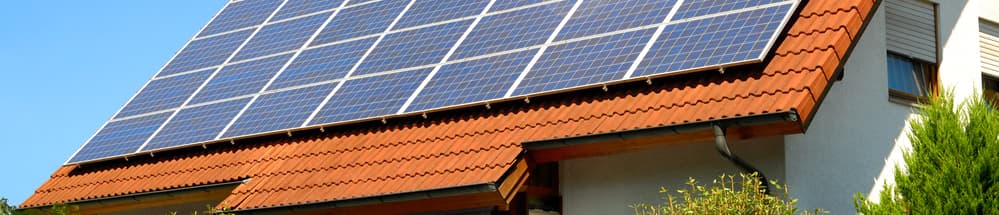
7. Consider Solar Panels
Home solar panels UK wide are an option for any household looking to cut down the amount of energy they buy-in from the National Grid. If you’re looking at solar panels, though, it’s worth noting that the government is currently devising a new way of paying homeowners for excess energy which is sold back to the Grid. While solar panel owners on the old feed-in tariff received money for the contributions to the national energy network, this is suspended as of April.
8. Use Fewer Chemicals
Chemicals found in everyday household cleaners and in things like weed killer can have an impact on the environment, not only in the fact that such chemicals can end up in the water table but also due to the disposable containers they come in. You’d be surprised how many natural household cleaners there are available to make or buy which are much more sustainable and can help make an eco-friendly house.

9. Try Repurposing Items
Just because something can theoretically be recycled like a glass jam jar, it doesn’t mean that you have to recycle it. Why not repurpose it as a storage container for food or small DIY equipment? Look at every object before you either throw it away or send it for recycling to work out whether it can be used for something else.
10. Think About Upcycling
Upcycling is a form of creative reuse that takes repurposing to another level. Instead of sending things for recycling, upcycling involves making something new out of those items. For example, instead of throwing old clothes away, can they be made into a blanket or a covering for the sofa? If upcycling isn’t an option for you, there may be someone out there who could make use of that item so you don’t have to send it to landfill. Check on the internet and post a free ad on an upcycling message board in your area. It’s also a good place to find bargains and inspiration too!
Recent Comments